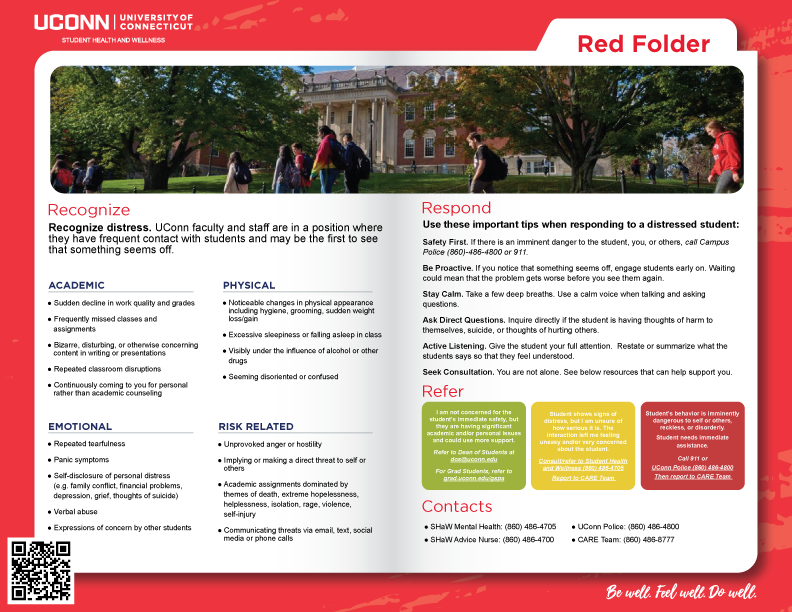
The Red Folder is a resource to help faculty and staff recognize, respond to, and refer students in distress. It contains important tips and information about campus and community resources to support UConn students.
Download the Red Folder:
Red Folder
Partner with us to support UConn students. Add this Red Folder graphic to your email signature to increase awareness of these resources.

Recognize Distress
UConn faculty and staff are in a position where they have frequent contact with students and may be the first to see that something seems off. Learn the indicators of student distress.

Respond
Each situation is different. Learn important tips on effective ways to respond to a student in distress.

Refer
Expressing concern and connecting the student to the appropriate resources is important. Determine what the student needs using the Response Protocol below.
Recognize Distress
Be on the lookout for the following signs of distress, their intensity and frequency.
Academic
- Sudden decline in work quality and grades
- Frequently missed classes and assignments
- Bizarre, disturbing, or otherwise concerning content in writing or presentations
- Repeated classroom disruptions
- Continuously coming to you for personal rather than academic counseling
Physical
- Noticeable changes in physical appearance including hygiene, grooming, sudden weight loss/gain
- Excessive sleepiness or falling asleep in class
- Visibly under the influence of alcohol or other drugs
- Seeming disoriented or confused
Emotional
- Repeated tearfulness
- Panic symptoms
- Self-disclosure of personal distress (e.g. family conflict, financial problems, depression, grief, thoughts of suicide)
- Verbal abuse
- Expressions of concern by other students
Risk Related
- Unprovoked anger or hostility
- Implying or making a direct threat to self or others
- Academic assignments dominated by themes of death, extreme hopelessness, helplessness, isolation, rage, violence, self-injury
- Communicating threats via email, text, social media or phone calls
Respond
Use the following important tips when responding to a distressed student.
Safety First
- If there is an imminent danger to the student, you, or others, call Campus Police or 911.
- Stay Calm. Take a few deep breaths. Use a calm voice when talking and asking questions.
Be Proactive
- If you notice that something seems off, engage students early on. Waiting could mean that the problem gets worse before you see them again.
Direct Questions and Active Listening
- Ask Direct Questions. Inquire directly if the student is having thoughts of harm to themselves, suicide, or thoughts of hurting others.
- Active Listening. Give the student your full attention. Restate or summarize what the students says so that they feel understood.
Seek Consultation
- Seek Consultation. You are not alone.
- Review Title IX guidelines here.
Refer
Expressing concern and connecting the student to the appropriate resources is important. Determine what the student needs using the Response Protocol below.
Academic
- Sudden decline in work quality and grades
- Frequently missed classes and assignments
- Bizarre, disturbing, or otherwise concerning content in writing or presentations
- Repeated classroom disruptions
- Continuously coming to you for personal rather than academic counseling
Physical
- Noticeable changes in physical appearance including hygiene, grooming, sudden weight loss/gain
- Excessive sleepiness or falling asleep in class
- Visibly under the influence of alcohol or other drugs
- Seeming disoriented or confused
Emotional
- Repeated tearfulness
- Panic symptoms
- Self-disclosure of personal distress (e.g. family conflict, financial problems, depression, grief, thoughts of suicide)
- Verbal abuse
- Expressions of concern by other students
Risk Related
- Unprovoked anger or hostility
- Implying or making a direct threat to self or others
- Academic assignments dominated by themes of death, extreme hopelessness, helplessness, isolation, rage, violence, self-injury
- Communicating threats via email, text, social media or phone calls
Where Should You Refer a Student in Distress?
Are you concerned for the student’s immediate safety?
NO
YES
Are they having significant academic and/or personal issues and could use more support?
Is your student’s behavior imminently dangerous to self or others, reckless, or disorderly? Does your student need immediate assistance?
YES
NO
YES
Refer to Dean of Students at dos@uconn.edu For Graduate Students, Refer to grad.uconn.edu/gspa/
Does your student show signs of distress, but you are unsure of how serious it is?
Call 911 or UConn Police
(860) 486-4800
Then report to CARE Team
YES
Consult and/or refer to Student Health and Wellness and submit a Care referral.
Dean of Students: dos@uconn.edu
Graduate School: grad.uconn.edu/gspa/
Consult and/or refer to Student Health and Wellness
Report to CARE Team

Resources
Please note the following resources to your students can use to succeed. Some of them are campus specific.
Storrs
- Academic Achievement Center
- Center for Students with Disabilities
- Dean of Students Office
- Department of Residential Life
- Employee Assistance Program
- International Student and Scholar Services
- Off-Campus and Commuter Student Services
- Office of Community Standards
- Office for Diversity and Inclusion
- Office of Institutional Equity
- Student Health and Wellness
- The Graduate School
- Veteran’s Resources
- Q Center
- Writing Center
Crisis Lines
National Suicide Prevention Lifeline (English)
Línea de vida nacional para la prevención del suicidio(Spanish)
Veterans Crisis Line
Crisis Text 24 hour Crisis line
The Trevor Project: Suicide Hotline for LGBTQ Youth
Mobile Assessment Services
CT Sexual Assault Crisis Hotline
Domestic Violence Hotline
Emergency Shelter