Student Health and Wellness aims to create an environment that prioritizes the health and safety of students both on campus and in the community. In support and partnership with the regular medical and mental health clinical services we offer, we provide alcohol and drug prevention, early intervention, and recovery support services to ensure that substance use does not hinder students’ academic, personal, or professional success. Our goal is to deliver a comprehensive array of evidence-based services that empower UConn students with the knowledge and skills needed for lifelong well-being.
When to Call for Help
Below are signs to look out for that indicate a fellow Husky needs medical attention. What’s most important though, is to recognize when your gut is telling you that something isn’t right. If you’re wondering if you should call for help, that’s the moment you know you have to. Only one of these signs needs to be present to indicate someone needs immediate medical attention—call 911. Remember, UConn’s #1 priority is the safety of our students, which is why we have a Good Samaritan Statement in place. You can read that statement here.
Alcohol Emergency – Signs of Alcohol Poisoning (Overdose):
Think CUPS:
- Cold, clammy, blue, gray, ashen, or pale skin
- Unresponsive, not waking up, difficulty remaining conscious
- Puking
- Slow or irregular breathing, slow heart rate
Opioid Emergency – Signs of an Opioid Overdose:
Think BLUE:
- Breathing is shallow, gurgling, erratic, or completely absent
- Lips and/or fingertips are blue or gray, due to decreased oxygen throughout the body
- Unresponsive: the person is not responding to verbal or physical stimulation
- Eyes: pupils are pinpoint and small
Only one of these signs needs to be present to indicate someone needs immediate medical attention—call 911. Remember, UConn’s #1 priority is the safety of our students, which is why we have a Good Samaritan Statement in place. You can read that statement here.
Watch this video to learn more about how to respond to opioid overdose using naloxone while waiting for 911 to arrive.
Watch Naloxone Education Video
Services
BASICS: Balancing Alcohol and Substances to Improve College Success
Balancing Alcohol and Substances to Improve College Success (BASICS) is a program that connects you with a supportive and non-judgmental facilitator trained to help you explore your use of alcohol or other substances. The purpose of these sessions is to provide a private space where you can have an open conversation about these topics without feeling any shame or fear of consequence. Our goal is to help you identify what is working for you as well as any changes you may want to make to support your overall well-being.
Sessions: Two sessions that are scheduled two weeks apart. The first session is an hour to an hour and a half (1 hour to 1.5 hours). The second session is 30 minutes to an hour (30 minutes to 1 hour).
Fees: No fee for sessions. Late cancellation/ no show fee: $15
Scheduling:
Visit student health portal
Select ‘Alcohol and Cannabis Screening’ under Type of Service
Then select ‘BASICS’ or ‘BASICS (Webex)’
Questions: Please feel free to email shaw-basics@uconn.edu regarding any questions or concerns.
Peer Health Educators Drop In Hours
Drop by Wilson Hall room 108 to connect with a peer health educator!
Substance Use Risk Reduction Peer Health Educators are here to offer a safe and non-judgmental space for students to talk about anything related to alcohol, cannabis, and other substance use-whether it’s for yourself or someone you care about.
Our peer educators are students just like you, trained to provide education, support, and connection to resources on and off-campus on wide variety of substance use topics.
Alcohol & Other Drug Therapy
Alcohol and Other Drug services are designed to offer specialized help to those whose alcohol and other substance use has progressed beyond college experimentation.
We help by:
Identifying those at risk as early as possible
Helping stop the progression of substance-related problems from reaching a point where academic careers, health, relationships, social life, and legal status is jeopardized.
Sessions: We assist students in regaining control of their lives through education, group therapy, brief individual counseling, and, when necessary, collaboration with external providers for more intensive services.
Schedule: If you’re interested in our services, please visit How to Get Started.
Alcohol and Other Drug services are designed to offer specialized help to those whose alcohol and other drug use has progressed beyond college experimentation.
We help by:
- Identifying those at risk as early as possible
- Helping stop the progression of substance-related problems from reaching a point where academic careers, health, relationships, social life, and legal status is jeopardized.
Sessions: Through education, group therapy and brief individual therapy, and, if needed, collaborating with outside providers for more intensive services, we help students halt the downward spiral and reclaim control of their lives.
Schedule: If you’re interested in our services, please visit How to Get Started.
Nicotine Reduction Counseling
Looking to quit nicotine? SHaW has trained specialists who are here to help!
Whether you smoke, vape, or use smokeless tobacco, we have Tobacco Treatment Specialists at SHaW who specialize in assisting you on your quitting journey. Through our Know-U-Well program, Nurse Coaches can help provide smoking withdrawal treatments, mindfulness techniques, and skills to help cope with triggers. Our student-centered approach uses evidence-based tools and techniques. We can even connect you with FREE resources.
We also have nicotine replacement products available at our Pharmacy including nicotine patches, lozenges and gum. Our pharmacy staff is available to assist in finding the correct product for you.
This is a no cost appointment held at SHaW’s Hilda May Williams Building.
These appointments are delivered by our Know-U-Well Nurse Coaches. Call (860) 486-4700 to book your appointment today.
Alcohol & Other Substance Education
AlcoholEdu
As part of the university’s comprehensive prevention efforts for students, UConn requires all incoming students to complete AlcoholEdu for College. AlcoholEdu is an online, evidence-based alcohol prevention program that empowers college students to make well-informed and safe decisions about alcohol.
Interested in learning more about your alcohol or cannabis?
These free, anonymous online assessment tools offer participants an opportunity to receive personalized feedback about their substance use, in the convenience and comfort of their own space. For students interested in making changes to their substance use, we recommend completion of the BASICS (alcohol and cannabis focused) program to receive more individualized support in conjunction with these assessment tools.
Educational Programs by Request:
Facts on Tap: Trivia Style Alcohol Education Program
High IQ: Navigating Cannabis: Trivia Style Cannabis Education Program
Know Your Pour: Interactive Alcohol Education Program
To learn about the different programs and to request, check out our program request form.
How to Support Friends Who May be Struggling with Substance Use?
Listen—Heavy alcohol or other drug use often develops to manage something that otherwise feels unbearable (anxiety, hopelessness, loneliness, physical and/or emotional pain, etc.). Listen for what’s underneath the use. Offering compassion and friendship can go a long way for someone who’s been struggling alone.
Let them know you care—When sharing your concerns, try describing what you’ve noticed—for example, “You mentioned feeling more anxious lately. I’ve noticed you’re smoking more often, too.”
Be a bridge to resources—UConn has lots of resources available. Help your friend find an option that fits their needs.
Offer substance-free ways to connect—Giving your friend a sober way to be in community with others can be a huge help. The UConn Recovery Community offers weekly meetings and can be another opportunity for your friend to find fellowship while making changes to their substance use.
Become a Recovery Ally—Participate in UConn’s Recovery Ally Training, a program that exists to expand awareness, sensitivity, and support to students in (or seeking) recovery from substance use disorders.
Practice self-care—Honor your own limitations and needs. Remember that you are human and can only affect change for things within your control. You can’t give to others what you don’t have to offer; taking care of yourself will keep you well and able to support your friend.

Risk Reduction Resources
Alcohol: Strategies to Reduce Your Risk
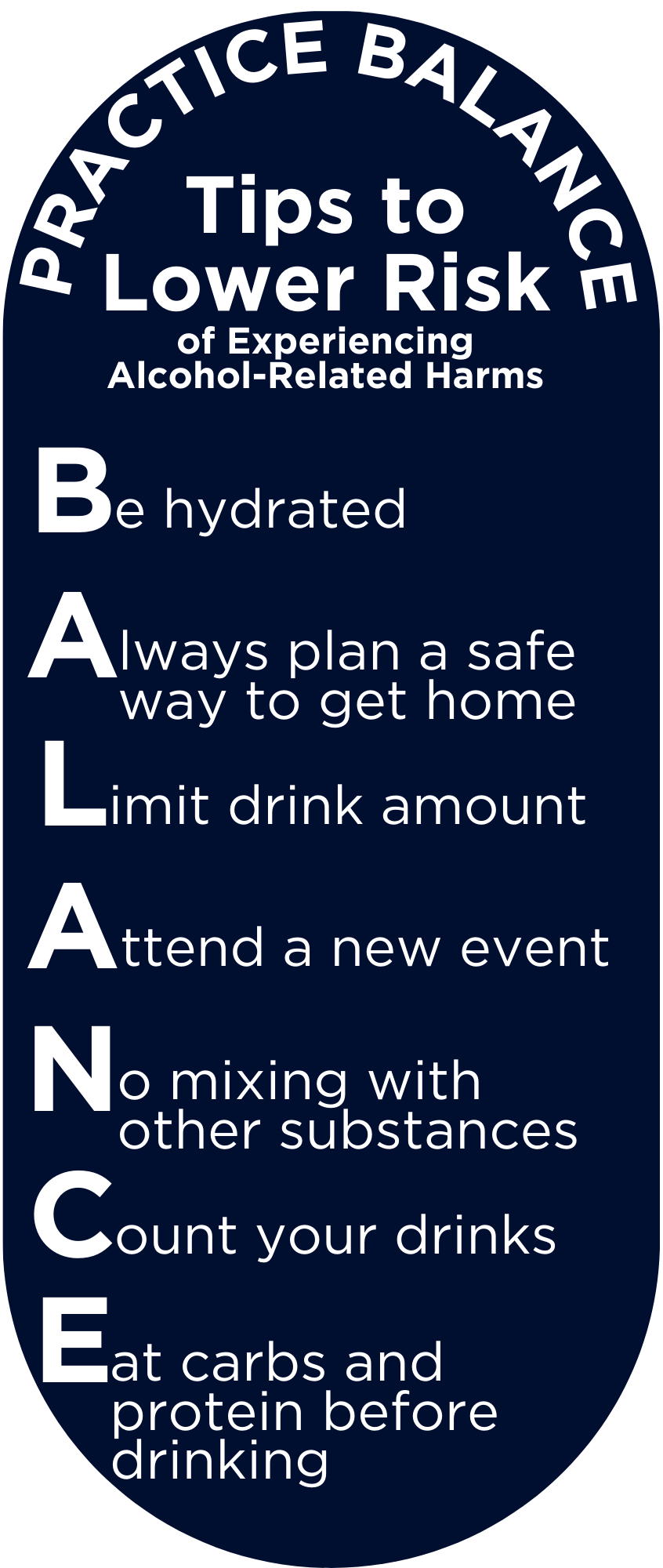
Utilize these strategies to avoid the not-so-good impacts alcohol can have sometimes.
Utilize standard drink sizes—Pour standard drinks so each drink really is only one drink.
Set limits you think will work for you—Students who have 4 or more drinks (females) or 5 or more (males) in one sitting are at increased risk for alcohol-related harm. Aiming for below that number is a great place to start!
Eat before drinking—it’ll help slow the absorption of alcohol and keep you feeling your best.
Pace yourself—sip and savor to both reduce your risk and enjoy yourself more. For more on how to pace yourself, see our guide to pacing below.
Hydrate—drinking water before, during, and after drinking alcohol goes a long way. Alternating alcoholic beverages with water or other non-alcoholic drinks can be helpful.
Get home safely—Grab a ride from a fellow (sober) Husky offering, or take a walk home with friends to make sure you get to your final destination safely!
Cannabis: Strategies to Reduce Your Risk
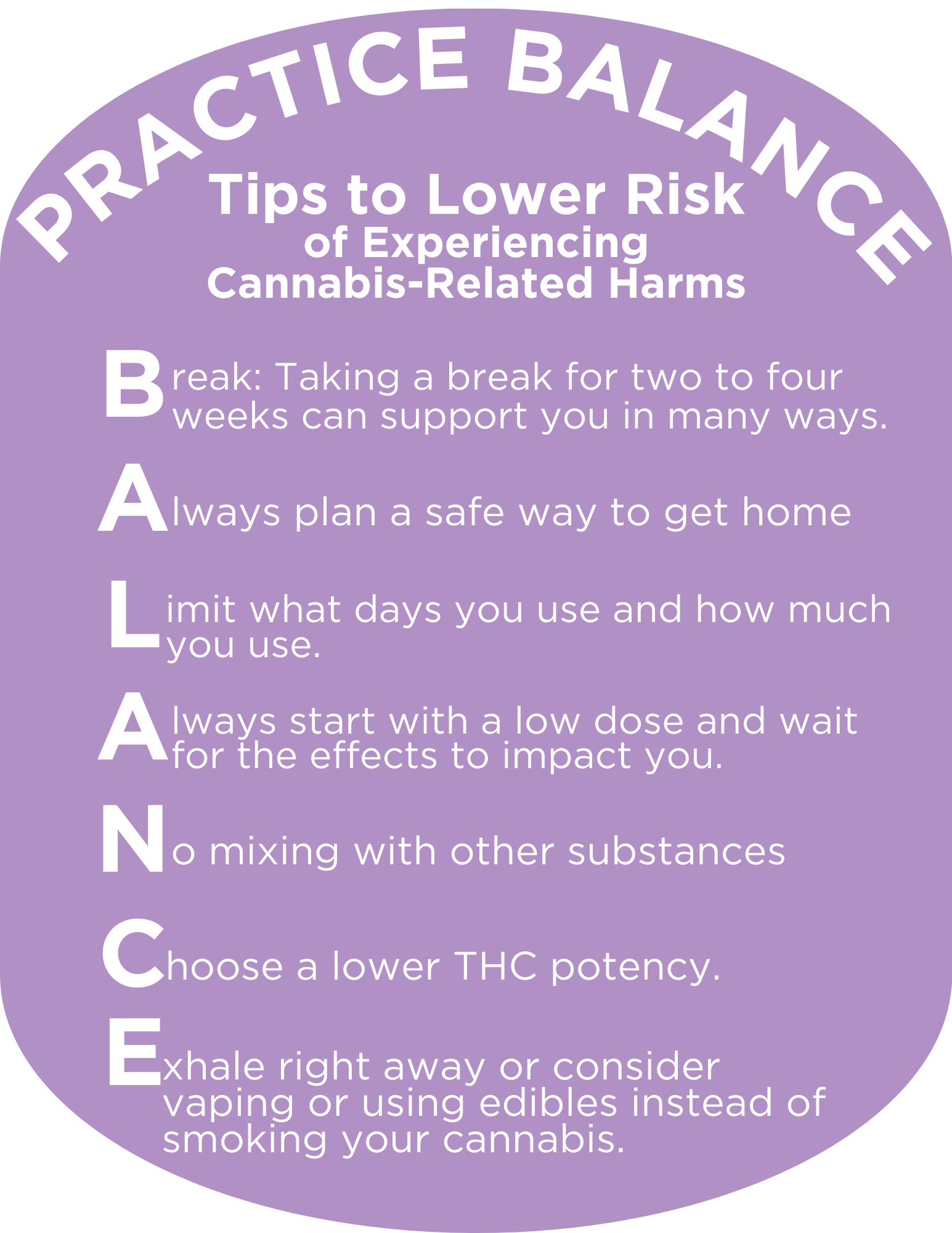
Utilize these strategies to reduce or avoid the potential not-so-good impacts cannabis can have.
Take a break—Experiment with cutting back on how much or how frequently you consume cannabis. Small changes can make a big difference!
Consider your timing—Avoid consuming cannabis before doing homework, taking exams, or going to class. Cannabis can impact cognition, and it’s important to have a clear mind so you can do your best academically!
Avoid sharing—Colds & the flu can pass from person to person from sharing joints, blunts, bongs, pipes, or vape pens. Sometimes caring means not sharing!
Keep it simple—Avoid mixing cannabis with tobacco, alcohol, or other drugs. Multiple substances in the body complicates things, and can have some unpleasant effects.
Get a safe ride home—Grab a ride from a fellow (sober) Husky offering, or take a walk home with friends to make sure you get to your final destination safely! Driving high puts an individual at a significantly increased risk of being in a car accident.
Guide to Pacing
Pacing or spacing out how much alcohol you’re consuming over a period of time is a great way to reduce your risk of experiencing alcohol-related harms.
Strategies for pacing yourself include:
- Alternating non-alcoholic and alcoholic drinks
- Eating a meal before drinking to slow the absorption of alcohol
- Trying to avoid drinking games and pre-gaming
To understand pacing on a deeper level, check out the following information about Standard Drinks, BAC, the Biphasic Effect, and When to Call for Help.
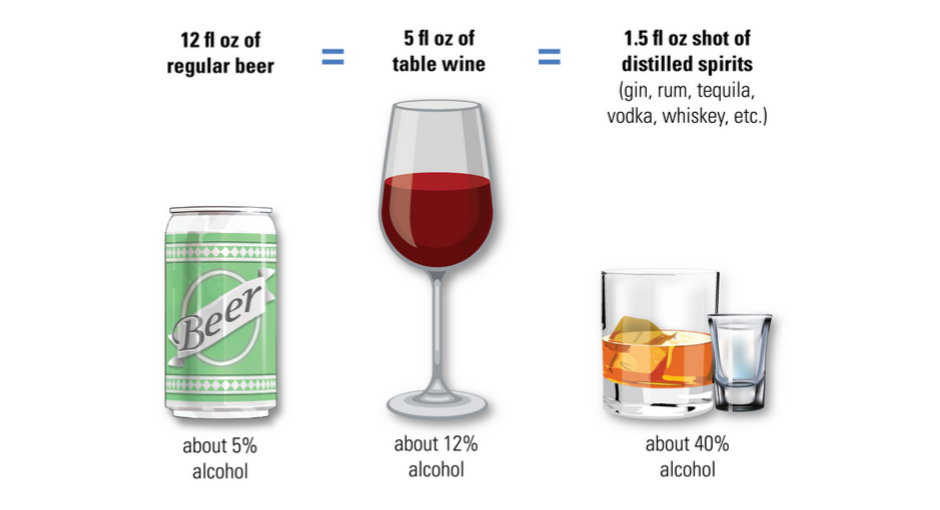
Standard Drinks
Knowing standard drink sizes is helpful if you’re trying to figure out how much alcohol is in your drink. Below is a guide that shows standard drink sizes for some common types of alcohol. Be aware, however, that some beverages may contain a higher percentage of alcohol than what’s shown. Some types of beer—IPAs, for example—are often much higher than 5% alcohol.
Source: NIAAA.gov
Blood Alcohol Concentration
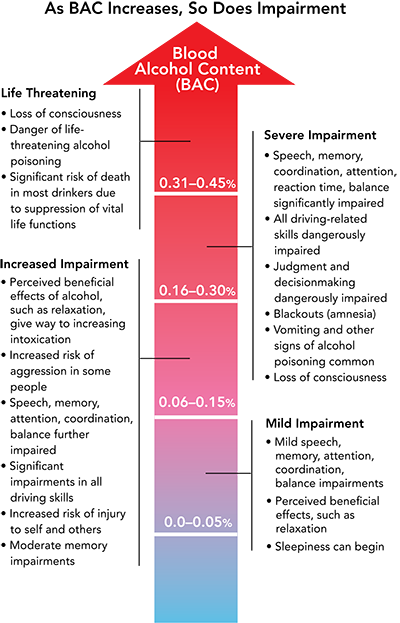
Once you know how to pour a standard drink, you can estimate your BAC. BAC stands for Blood Alcohol Concentration and is the ratio of alcohol to blood in your body.
Biological sex, body weight, amount consumed, and drinking pace are the most significant influences on BAC. Utilizing a BAC calculator is a great way to get a sense of what your BAC might look like, while taking those variables into account. You can find one here. Please note that results from these calculators are estimations and should not be used to determine if you can safely drive.
Included here is a general guide to what someone without a tolerance might experience at each BAC range.
Source: NIAAA.gov
Biphasic Effect
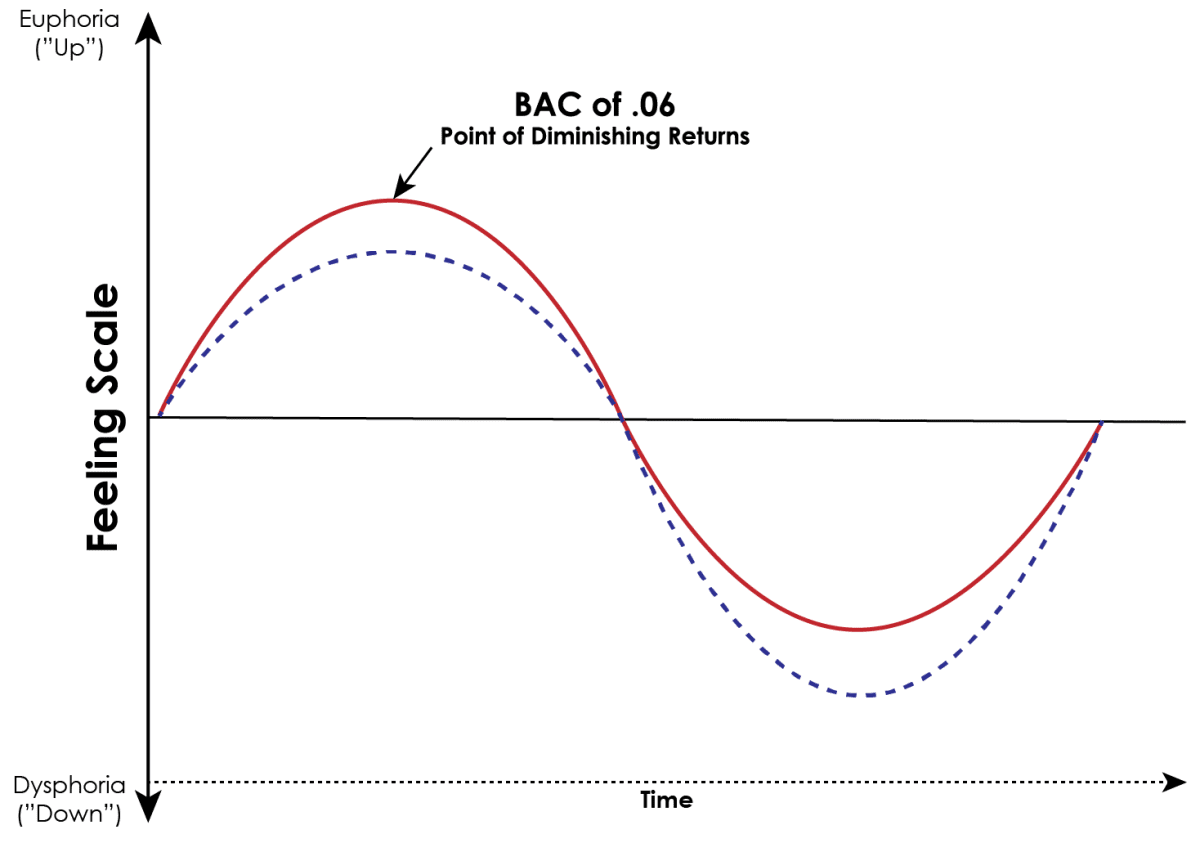
Utilize what you know about your BAC to consider a drink limit that’s right for you. A BAC of .06 is considered the point of diminishing returns– the BAC at which drinking more alcohol leads to fewer of the pleasurable effects associated with drinking. Keeping your BAC below .06 will reduce experiences you might want to avoid, such as blacking out, feeling nauseous, or doing things you’ll later regret.
When to Call for Help
Below are signs to look out for that indicate a fellow Husky needs medical attention. What’s most important though, is to recognize when your gut is telling you that something isn’t right. If you’re wondering if you should call for help, that’s the moment you know you have to.
Signs of Alcohol Poisoning:
- Confusion
- Difficulty remaining conscious , or inability to wake up
- Vomiting
- Seizures
- Slow or irregular breathing
- Slow heart rate
- Clammy skin
- Body temperature change
- Skin color changes (could be bluish or pale)
These signs indicate someone needs immediate medical attention—call 911. Remember, UConn’s #1 priority is the safety of our students, which is why we have a Good Samaritan Statement in place. You can read that statement here.
Resources for Making Changes to Your Substance Use
The T-Break Guide: A day-by-day guide to support you in taking a successful break from cannabis.
QuitSTART: The quitSTART app is a free smartphone app that helps you quit smoking with tailored tips, inspiration, and challenges.
BASICS: Balancing Alcohol and Substances to Improve College Success (BASICS) is a program that connects you with a supportive and non-judgmental facilitator trained to help you explore your use of alcohol or other substances. The purpose of these sessions is to provide a private space where you can have an open conversation about these topics without feeling any shame or fear of consequence. Our goal is to help you identify what is working for you as well as any changes you may want to make to support your overall well-being.